my carry-on list
three weeks, one bag, zero regrets*
*one regret. it was the hiking boots.
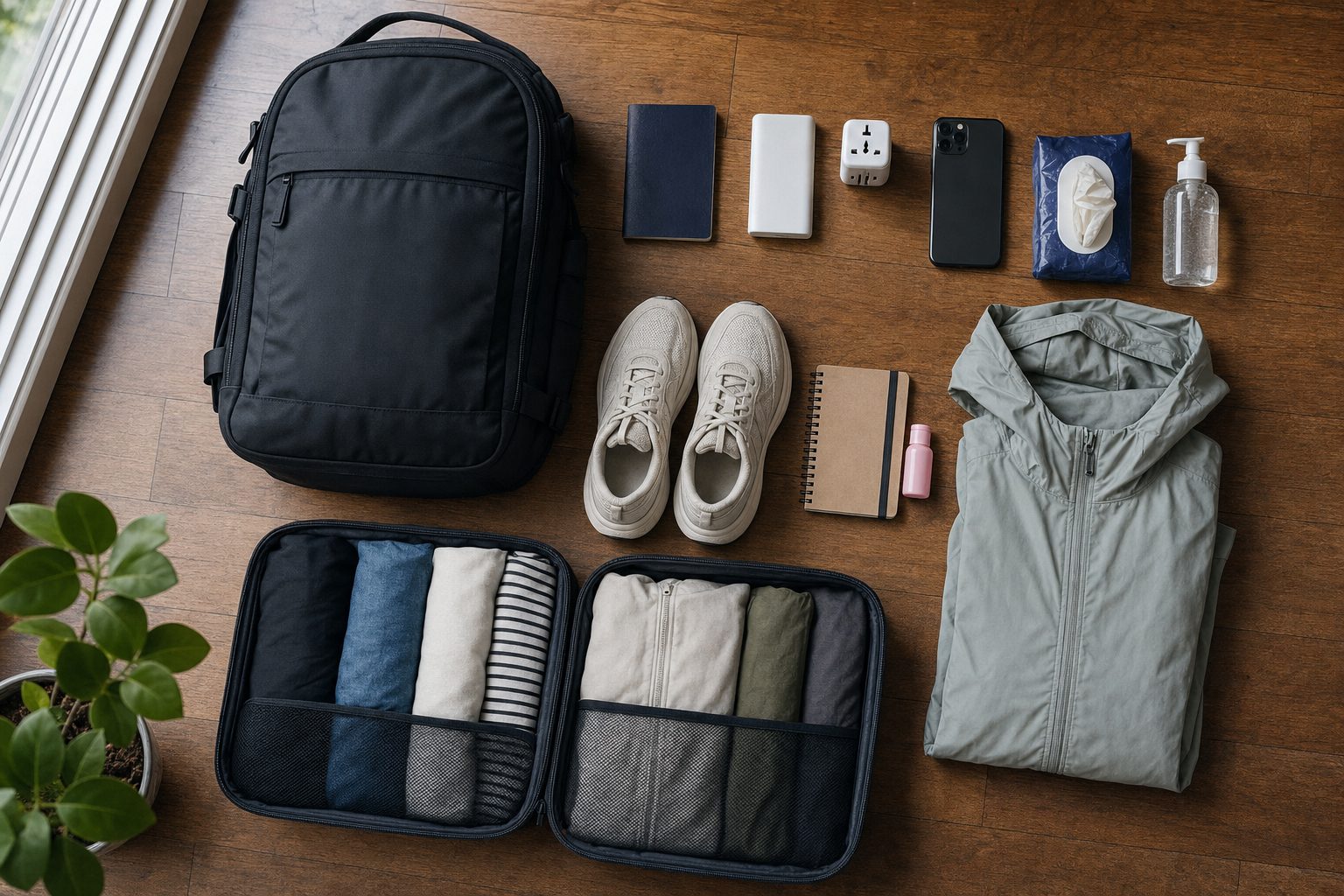
- three weeks in china fits in a carry-on if you pack for one week and do laundry. hotels and laundromats make it easy
- power banks on chinese domestic flights need a visible 3c mark and must be under 100wh, in your carry-on. trains just cap it at 100wh
- china uses type a, c and i plugs at 220v. most phone and laptop chargers are fine, hair tools usually aren't
- bring deodorant, sunscreen you like, any meds and pocket tissues. buy umbrellas, snacks and cables there
i’ve been to china about five times now, and every single time i’ve gone carry-on only. not because i’m a minimalist (my apartment would disagree) but because hauling a giant suitcase through beijing south station at rush hour is a side quest i only needed to do zero times to know i didn’t want it.
this is the actual list from my most recent trip: three weeks, beijing → xi’an → chengdu → chongqing → shanghai, mostly on bullet trains with one domestic flight. one 40l backpack, one small sling. (if you ever take an overnight sleeper train, that’s where carry-on really pays off.) my friend jules came for the second half with a suitcase “for souvenirs” and spent a lot of time carrying it up metro stairs.
here’s what earned its spot, what didn’t, and what you should just buy when you get there.
why carry-on only works in china
three reasons:
- trains. bullet trains have overhead racks and space at the end of each car, but big suitcases fill up fast. a backpack goes anywhere
- metros and stairs. lots of stations have escalators, but not every exit does. you will find the one exit without one
- laundry is easy. a lot of mid-range hotels have free or cheap self-service washers (and sometimes dryers) on a guest floor. i did laundry roughly every 6–7 days
the trick is packing for a week, not three. everything else is a repeat. check china weather by month for what each city will throw at you.
the full list (and how much i used each thing)
| item | how many | used it? | worth it? |
|---|---|---|---|
| t-shirts (quick-dry or merino) | 5 | daily | yes |
| long-sleeve layer | 1 | most evenings | yes |
| light packable jacket | 1 | yes, xi’an got cold at night | yes |
| pants (one jeans, one lighter) | 2 | daily | yes |
| shorts | 1 | chongqing humidity said yes | yes |
| underwear + socks | 7 each | obviously | yes |
| walking shoes (broken in) | 1 pair, on my feet | 20k+ steps most days | the most important thing on this list |
| sandals / slides | 1 pair | hotel, hot days | yes |
| hiking boots | 1 pair | once, at the great wall | no |
| phone + charger | 1 | constantly | obviously |
| power bank (3c-marked, ~20,000mah) | 1 | every single day | yes |
| universal plug adapter | 1 | some hotels | yes, as insurance |
| short usb-c cable + spare | 2 | yes | yes |
| laptop | 1 | twice | honestly, no |
| pocket tissues | a few packs | constantly | yes |
| hand sanitizer | 1 small | yes | yes |
| deodorant | 1 | yes | bring it, see below |
| sunscreen | 1 | yes | bring it, see below |
| basic meds (ibuprofen, imodium, antihistamine) | small kit | yes, after a week of chongqing hotpot | yes |
| travel pillow | 1 | never | no |
| paper guidebook | 1 | never | no |
things i’d leave at home next time
hiking boots. i brought them “for the great wall.” i wore them for one day and then carried a pair of bricks across five cities. the great wall sections most people visit are steep but paved or stepped, and good sneakers are fine. hiking boots only make sense if you’re doing wild, unrestored sections.
the laptop. i thought i’d “get some work done.” i opened it twice. if you don’t actually need it, your phone plus a small foldable keyboard (or nothing) is lighter.
the travel pillow. bullet trains are smooth and the seats are comfy. i fell asleep on my backpack instead.
a paper guidebook. everything i needed was on my phone. menus got translated by camera, maps were in an app, and train info lived in the booking app.
too much cash. i brought a fat stack of ¥100s “just in case.” i used maybe $45 the whole trip. a small backup amount is smart, but china runs on alipay and wechat pay.
things to bring from home (harder to find in china)
you can buy almost anything in big chinese cities. but a few things are either harder to find, pricier, or slightly different from what you’re used to:
- deodorant. it exists, but selection is small, and it’s often pricier than at home. bring a full one
- sunscreen you actually like. plenty is sold, but a lot of it contains “whitening” ingredients, which most visitors don’t want. check labels or bring your own
- prescription meds, in original packaging, plus a copy of the prescription. don’t count on finding your exact brand
- tampons, if you use them. they’re easier to find than they used to be in big cities, but selection is still limited compared to pads, so bring what you’ll need
- pocket tissues. you can buy them anywhere, but have some from day one. public toilets don’t always have paper, and the first time you learn this should not be the hard way (it was for me, in xi’an)
stuff i just bought there instead
this is where you save bag space. all of this is cheap and everywhere:
- umbrella. convenience stores sell them for around $3–6. chengdu and chongqing are humid and drizzly, and summer storms come out of nowhere
- snacks for train days. convenience stores at every station. i lived on tea eggs, peanuts and some kind of spicy tofu stick for three weeks
- phone cables and chargers. if you lose one, any electronics market or convenience store has usb-c cables
- toiletries (shampoo, toothpaste, etc). most hotels provide basic ones, and supermarkets have everything
- a cheap extra layer. clothing is easy to find in any mall, especially uniqlo-style basics
- a reusable water bottle. hot water dispensers are everywhere, especially on trains and in stations
if you’re timing the trip, weather changes what you need a lot. a lighter list works great in spring and autumn. winter in beijing needs real layers. our best time to visit china guide breaks it down by month.
power banks in china: the rules nobody tells you
this is the one thing that can actually get stuff confiscated, so pay attention.
on domestic flights in china (as of late 2026):
- since june 2025, power banks on domestic flights need a clear 3c (ccc) certification mark printed on them. no mark, faded mark, or a recalled model, and security can take it
- under 100wh (roughly a 27,000mah power bank or smaller) is fine without approval
- 100–160wh needs airline approval, max two
- over 160wh is a no
- power banks always go in carry-on, never checked luggage
the 3c thing catches a lot of foreigners, because power banks bought at home usually don’t have it. on my second trip, the power bank i brought from home got a long, suspicious look at security in chengdu. now i just buy a 3c-marked one when i land. renting one is another option (more on that below).
on trains, the 12306 rule is simpler: power banks up to 100wh with a clear capacity label are allowed. reports say they don’t check for the 3c mark, but rules change, so check before you go.
plugs and voltage in china
china uses type a, type c and type i plugs, at 220v, 50hz. what that means in practice:
- type a is the two-flat-prong plug from the us. a lot of chinese outlets have a slot that takes it directly
- type i is the slanted three-prong one (like australia). most wall sockets combine a type a and a type i slot
- type c is the round two-pin european plug, which also fits many sockets
- us three-prong plugs (type b) often won’t fit. you’ll want an adapter for those
voltage: check the label on your chargers. if it says “100–240v,” you’re good (most phone, laptop and camera chargers are). if it only says 110–120v, like a lot of us hair dryers and straighteners, it can fry at 220v. leave those home — most hotels have a hair dryer anyway.
i brought a universal adapter with usb-c ports built in, so i could charge my phone, power bank and headphones off one socket. in older hotels with one outlet behind the bed, that’s the difference between waking up at 100% or at 14%.
tech that actually matters
two things i’d never travel to china without now:
- mobile data from the second you land. everything in china runs through your phone: payments, maps, translation, train tickets. i use a roaming esim, which also means my usual apps keep working. full breakdown in internet in china
- a short, sturdy charging cable you keep in your pocket, separate from your bag. you will need it at the exact moment your bag is in the overhead rack
and if you’re wondering how much the whole trip runs once you’re there (food, trains, hotels), the china travel budget guide has real numbers.
the vibe check
three weeks in china carry-on only is not only possible, it’s honestly the move. the shortlist:
- pack for one week, do laundry, repeat. hotels make this easy
- bring: broken-in walking shoes, deodorant, sunscreen you like, meds, pocket tissues
- leave home: hiking boots (unless you’re going wild), the laptop you won’t open, the travel pillow, the guidebook
- buy there: umbrella, snacks, cables, toiletries, extra layers
- power bank: 3c-marked, under 100wh, carry-on only for domestic flights
- plugs: type a/c/i at 220v. check your chargers say 100–240v
jules, for the record, now packs carry-on too. it took exactly one set of metro stairs in chongqing.
the kit for this trip
heads up: some links above are affiliate links. if you book through them we earn a small commission at no extra cost to you — it keeps this guide free. more on that.