bullet trains
12306 app, seat classes, step by step
trains are actually insanely good.
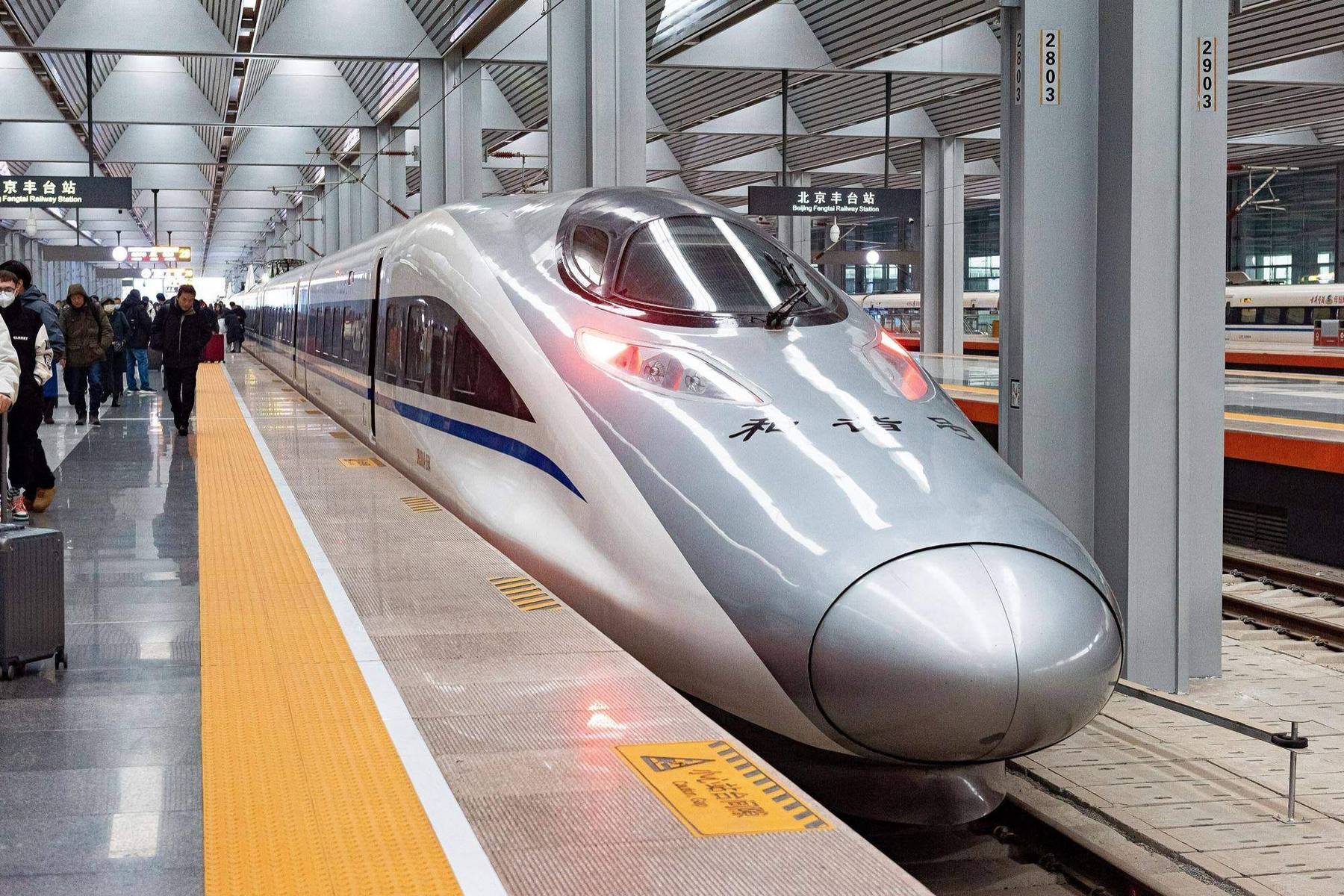
- china's high-speed rail is the best way between most big cities. beijing → shanghai takes about 4.5 hours, center to center
- book on trip.com (english, foreign cards) or the official 12306 app. tickets open 15 days ahead
- your passport is your ticket. bring the exact passport you booked with
- second class is totally fine. pick seat a or f for a window
- get to big stations 45–60 minutes early. gates close a few minutes before departure, and they mean it
china has more high-speed rail than the rest of the world combined, and it’s great. trains are fast, on time, spotless, and leave from stations in the middle of the city. for most trips under ~6 hours they beat flying. no airport security theater, no 40-minute taxi out to the runway.
here’s how to book as a foreigner, which seat to pick, and how not to miss your train at a station the size of a small airport.
the train types (the letter matters)
every train number starts with a letter. it tells you how fast it goes:
| prefix | what it is | top speed | use it for |
|---|---|---|---|
| g | gaotie, high-speed | 300–350 km/h | big city-to-city trips, the default |
| d | dongche, fast | ~200–250 km/h | regional routes, some overnight sleepers |
| c | intercity | ~200 km/h | short hops (e.g. beijing ↔ tianjin) |
| z / t / k | classic trains | under 160 km/h | budget overnight sleepers, slow scenic routes |
if you’re picking between a g and a k on the same route, the k might take three times as long. g trains are the move unless you specifically want a slow sleeper (we did it once: what the overnight sleeper train is actually like).
seat classes on china’s bullet trains
| class | layout | vibe | rough price |
|---|---|---|---|
| second class (二等座) | 3+2 | clean, comfy, plenty of legroom | base fare |
| first class (一等座) | 2+2 | wider seats, quieter car | ~1.5× second |
| business class (商务座) | 2+1 or 1+1, lie-flat | lounge access, snacks, main character energy | ~3× second |
honestly, second class is great. it’s nicer than most european or american economy rail. upgrade to first if you’re on a 5+ hour ride or want more room for a laptop.
window seats: in second class, a and f are windows, c and d are aisles, and b is the middle. in first class it’s a/c and d/f. you can pick a seat when you book (if seats are left).
example routes (as of late 2026, prices vary by time and demand)
| route | fastest g train | second class, roughly |
|---|---|---|
| beijing → shanghai | ~4.5 hrs | around $80–100 |
| shanghai → hangzhou | ~1 hr | around $10–12 |
| beijing → xi’an | ~4.5–5 hrs | around $75–90 |
| chengdu → chongqing | ~1–1.5 hrs | around $15–20 |
| guangzhou → shenzhen | ~30–40 min | around $10–15 |
china now uses some dynamic pricing on busy lines, so fares can change by time of day and season. treat these as ballpark figures and check the live price when you book.
how to book china train tickets as a foreigner
tickets go on sale 15 days before departure and popular trains sell out fast, especially on weekends and holidays. you need your passport number and the name exactly as printed.
option 1: trip.com (easiest)
trip.com plugs into the official 12306 system, so it’s the same train and the same seat. the difference is that it’s fully in english and takes foreign cards without drama. depending on the ticket you may see a small service fee. for a first trip, the convenience is worth it.
- search, pick a train and seat, enter passport details, pay
- you get a confirmation with your train number, car and seat. screenshot it
- no paper ticket needed, because your passport is your ticket
option 2: 12306 (the official app)
12306 is china railway’s own app and site. it has an english version and no booking fee.
- register with your passport. foreigners usually need to complete identity verification, which sometimes includes a face scan or a quick in-person check at a station
- payment works with alipay, wechat pay, and in many cases foreign cards, but foreign cards can still be hit or miss
- 12306 also has extras like food delivery to your seat at certain stations and a waitlist feature for sold-out trains
the move for most people: trip.com for your first trip, 12306 if you’re traveling a lot or want to save the fee.
stations: how not to miss your train
chinese high-speed stations are huge, often far from older city centers, and many cities have more than one. check which station is on your ticket.
classic mix-ups:
- beijing: beijing south (shanghai and tianjin trains), beijing west (xi’an and the south), beijing north, beijing fengtai, beijing chaoyang
- shanghai: shanghai hongqiao (most high-speed trains, right by the airport of the same name), shanghai station, shanghai south
- xi’an: xi’an north handles basically all the bullet trains
- chengdu: chengdu east and chengdu south are the main ones for chongqing
step by step at the station
- arrive 45–60 minutes early at big stations, or 90 minutes on holidays. most stations are on the metro
- id check + security at the entrance. you show your passport and your bags go through an x-ray. no airport-style liquids rule, so bring your water
- find your gate on the departure boards. they show train number, time, and gate (检票口). english is shown on most boards in big cities
- wait in the hall. boarding usually opens ~15–20 minutes before departure
- go through the ticket gate with your passport. at a growing number of big stations the automatic gates now read foreign passports. if yours doesn’t scan, use the manual lane (人工通道), where staff check it by hand in a few seconds
- find your car. the platform floor is marked with car numbers. stand at yours
- gates close a few minutes before departure (often ~5 minutes). if you’re late, you’re not getting on
if you miss it, go to the ticket office or the app. you can often switch to a later train the same day, depending on the ticket.
luggage on china trains
- there’s an official size and weight limit (around 20 kg per adult for regular passengers), but in practice normal suitcases are fine
- big bags go in racks at the end of each car. they fill up, so board promptly
- small bags go overhead
- you carry your own luggage. there’s no checked baggage like on a plane
onboard: food, power, wifi
- food: carts come through with snacks, drinks and boxed meals. longer trains have a dining car. or bring your own, it’s normal (and allowed)
- hot water: every train has a boiling-water tap. people bring cup noodles and tea, and it’s a whole culture
- power: outlets at most seats on g/d trains
- wifi: some trains have it, but it usually needs a chinese phone number and it’s slow. use mobile data. a roaming esim works fine along the main lines (more in internet in china)
china train etiquette
- queue for the gate even when it feels like everyone’s crowding. it moves quickly
- quiet carriages (静音车厢) exist on many trains. no calls, no audio out loud. you can request one on 12306
- headphones for videos. playing videos out loud is very common, and people are increasingly over it. don’t add to it
- no smoking at all, including in the bathrooms. it can trigger alarms, stop the train, and get you fined
- recline gently and check behind you first
- don’t block the aisle with your suitcase. use the racks
- say thanks (xièxie) to staff. it goes a long way
train vs flying: quick rule
- under ~5–6 hours by train? take the train. city-center stations, less waiting, no flight delays
- longer than that? (beijing → chengdu, shanghai → guilin, anywhere → kunming) a domestic flight can be quicker and sometimes cheaper
the vibe check
- g trains are the default. second class is plenty
- book 15 days out on trip.com (easy) or 12306 (no fee), and use your exact passport details
- check your station, arrive 45–60 minutes early, and keep your passport handy
- gates close a few minutes before departure, so don’t push it
- quiet, headphones, hot water noodles. you’re basically a local now
planning the route? our first-time china itinerary strings beijing, xi’an, chengdu and shanghai together almost entirely by bullet train.
the kit for this trip
heads up: some links above are affiliate links. if you book through them we earn a small commission at no extra cost to you — it keeps this guide free. more on that.