beijing
北京
palaces, hutongs, roast duck, and the great wall an hour away.
book the forbidden city early. like, actually early.
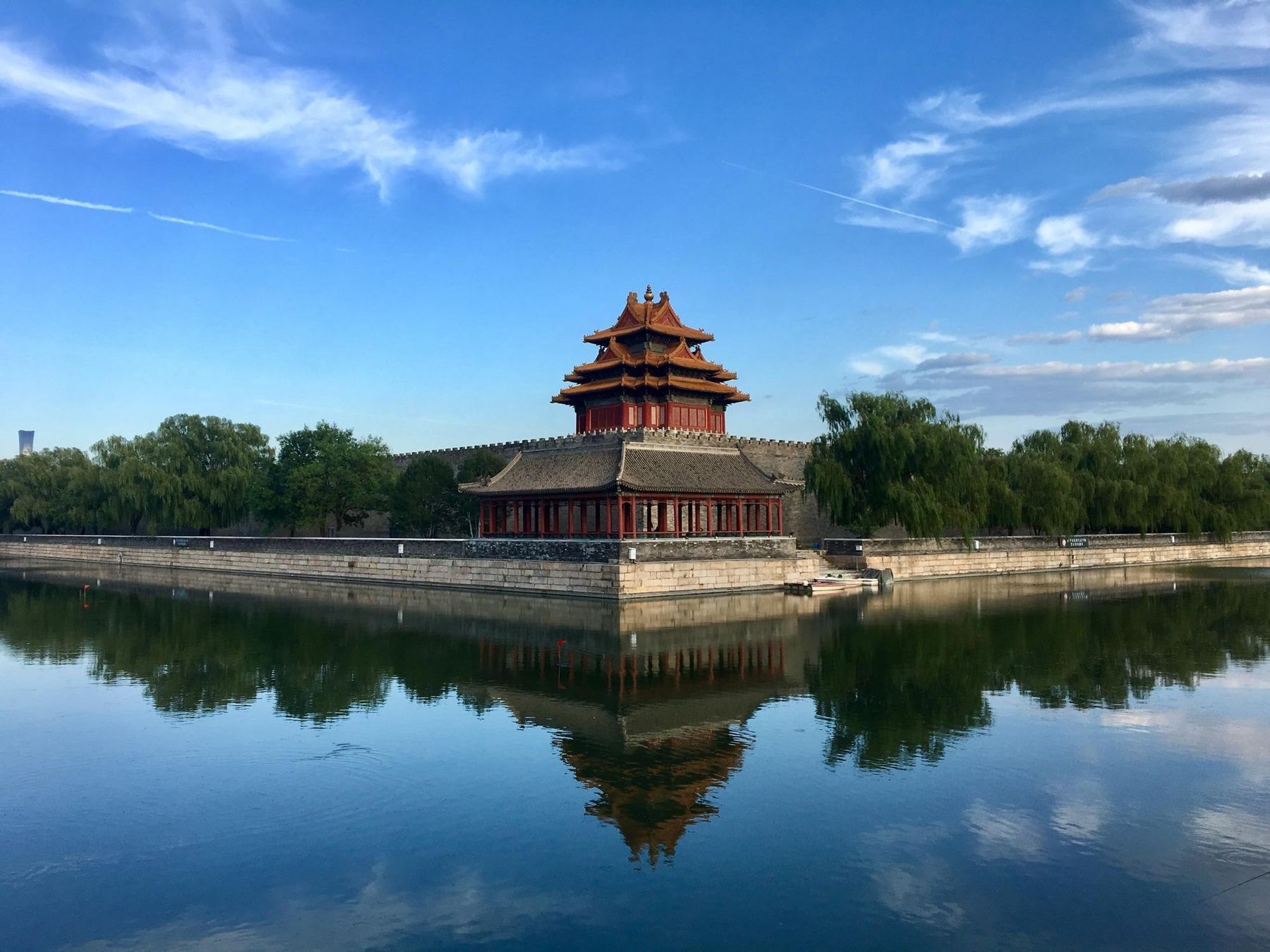
- forbidden city tickets drop 7 days ahead at 8pm beijing time and sell out fast. passport name, closed mondays.
- stay in dongcheng (dongsi, gulou, wangfujing) — you can walk to hutongs and ride the metro to everything else.
- 4 days is the sweet spot: imperial core, great wall, hutongs + 798, temple of heaven + summer palace.
- the temple of heaven's halls are closed on mondays again as of september 2026. plan mondays around parks, walls and food.
- both airports have a direct express train into the city for $4–5.
beijing is giant and very serious, and it runs on bookings. the palaces are huge, the avenues are 10 lanes wide, and almost every big sight wants your passport number a few days ahead. annoying? a bit. but once you get the system it’s one of the easiest cities in china to visit, and the hutongs in between the big stuff are the part you’ll actually miss.
this guide covers how long to stay, which neighborhood to book, the booking rules that catch people out, and what to eat between all the walking.
beijing quick facts
| airports | capital (pek), northeast · daxing (pkx), far south |
| main train stations | beijing south (to shanghai), beijing west (to xi’an, chengdu), beijing north (great wall line) |
| best months | april–may, september–october |
| days you need | 4 is ideal, 3 if you’re rushing |
| budget hotel | around $45–75/night for a decent licensed place |
| closed mondays | forbidden city, temple of heaven’s halls, lots of museums |
if this is your first trip, check out the first-time china itinerary. most people start or end in beijing.
how many days in beijing?
- 3 days: forbidden city + jingshan, great wall, temple of heaven + hutongs. tight but you can do it.
- 4 days (the move): add summer palace and 798, and slow down in the hutongs.
- 5+ days: add a second great wall section, the lama temple, a day trip to tianjin or gubei water town, and a couple of long food nights.
where to stay in beijing (by neighborhood)
| neighborhood | vibe | good for |
|---|---|---|
| dongcheng: dongsi / nanluoguxiang / gulou | courtyard hotels, hutongs, bars | first-timers who want old beijing |
| wangfujing / dongdan | big hotels, shopping street, central | walking to the forbidden city |
| qianmen / dashilar | old shopfronts, close to the square | early starts at tiananmen |
| sanlitun / chaoyang | modern, nightlife, international food | if you want cocktails more than courtyards |
our pick: dongsi or gulou. you can walk into the hutongs in the morning, line 5 and line 6 get you anywhere, and you’re close enough to the palace that you’re not on the metro for an hour. for the full breakdown of each area, see which beijing neighborhood to stay in.
the forbidden city: booking rules (read this before anything else)
the palace museum is the biggest sight in beijing and the one people mess up most. as of late 2026:
- booking is mandatory. you can’t buy at the gate. no booking, no entry.
- tickets release 7 days ahead at 8:00pm beijing time. summer weekends and holidays can sell out in minutes.
- book with your passport. the name and number have to match the passport you bring. that physical passport is your ticket.
- max 5 people per booking, and one passport can only be used for one booking per day.
- price: about $9 april–october, $6 november–march. the treasure gallery and clock gallery cost around $1.50 extra each and are worth it.
- closed mondays (except statutory holidays).
you go in from the south (meridian gate) and come out the north (gate of divine might). you can’t do it backwards, so don’t plan a meetup at the north gate expecting to enter there. the palace is the centerpiece of a whole north–south line through the city — our beijing central axis walk connects it end to end.
booking works through the official palace museum website or its wechat mini program, and the passport option is there. if 8pm lands at 2am your time, or it’s peak season, a guided tour is honestly the less stressful option.
tiananmen square also wants a free real-name reservation with your passport, and security lines can be long. leave buffer time.
what to do in beijing
temple of heaven
a huge park where the emperor prayed for good harvests. the round blue hall of prayer for good harvests is iconic. go early (it opens around 6am) and you’ll catch locals doing tai chi, ballroom dancing, hacky sack with feathers and choir practice. it’s honestly the best free people-watching in china.
- combo ticket (with halls): around $5 peak / $4 off-peak. park only: around $2.
- book ahead on the official park platform or trip.com with your passport.
- as of september 1, 2026 the historic buildings are closed on mondays again (except holidays). the park is open, the halls aren’t.
summer palace
the imperial retreat: a big lake, the long corridor (painted beams for 700+ meters), and the tower of buddhist incense up on longevity hill. plan a half day at least. take a boat across kunming lake and you’ll get a lowkey perfect afternoon.
- combo ticket around $9 peak / $7.50 off-peak, park only around $4.50.
- northwest of the city. metro line 4 to beigongmen gets you to the north gate.
the hutongs
these are the old alley neighborhoods, and they’re the real beijing. the best way to see them is to just wander.
- nanluoguxiang: famous and busy. walk through it, then take the side lanes.
- wudaoying hutong: cafes, small shops, near the lama temple.
- shichahai / houhai: lakes, bars, rent a pedal boat, night views from silver ingot bridge.
- dashilar & yangmeizhu xiejie: south of qianmen, older and grittier, with design shops tucked inside.
rent a shared bike through alipay and cruise the lanes. that’s the main character move in beijing.
lama temple (yonghegong)
a working tibetan buddhist temple with incense smoke, prayer halls and a 26-meter buddha carved from one sandalwood tree. around $4, and you can pair it with wudaoying next door. if the halls and statues all blur together, how to read a chinese temple decodes what you’re looking at.
798 art district
old factory buildings in the northeast, now full of galleries (ucca is the big one), cafes and murals. it’s a good half day if you’re museumed out. heads up: a lot of galleries close on mondays, so check before you go.
the great wall
it gets its own guide: the great wall guide. short version: mutianyu is the best first-timer section. it’s restored but not crazy busy, there’s a cable car up, and you take a toboggan down. a tour saves you wrangling buses at 7am.
what to eat in beijing
- peking duck. crisp skin, thin pancakes, sweet sauce, cucumber. siji minfu is the classic mid-range pick (expect a queue, take a number on the app). da dong is the fancy one.
- zhajiangmian. thick noodles with fermented soybean pork sauce. cheap, filling, very beijing.
- jianbing. the breakfast crepe with egg, crispy cracker and sauce. around $1–2 from a street cart.
- lamb skewers + hot pot. old-school copper-pot mutton hot pot (shuan yangrou) is a winter must.
- jiaozi. dumplings everywhere, cheap, and always good. how they differ from shanghai’s soup dumplings is all in the chinese dumpling family tree.
- douzhi (fermented mung bean drink). for the brave. it’s giving sour feet. try it once for the story.
for what to point at on menus, our chinese food guide has you covered.
getting around beijing
- metro: huge and clean, with english signs. scan the transit qr code in alipay (search “transport” or “beijing subway”) and you’re in. rides are around $0.50–1.
- security checks at every metro station. bags through the scanner, every time. budget a few extra minutes.
- didi: works in english inside alipay. good for late nights and hutong addresses.
- walking: distances are bigger than they look on the map. the forbidden city alone is about 1km end to end.
set up payments before you land: alipay & wechat pay for foreigners. and grab the apps from our china travel apps list.
getting in and out of beijing
from the airports
- capital airport (pek): the airport express runs to dongzhimen / sanyuanqiao in about 25–35 min for a flat fare of about $4. connect to lines 2 and 13.
- daxing airport (pkx): the daxing airport express gets to caoqiao in about 20 min for around $5. connect to lines 10 and 19. taxis into town run around $15+ and take an hour or more.
by train
beijing is the hub of china’s high-speed network:
- beijing → shanghai: around 4.5–5.5 hours from beijing south. (only have time for one? read beijing vs shanghai.)
- beijing → xi’an: around 4.5 hours from beijing west.
- beijing → tianjin: around 30 minutes. easy day trip.
full breakdown in the china train guide.
day trips from beijing
- mutianyu or jinshanling great wall. jinshanling is wilder and better for hiking photos.
- ming tombs. often paired with the great wall on tours.
- gubei water town. a canal town right under the simatai wall. go for an overnight and walk the wall lit up at night.
- tianjin. european-era architecture, street snacks, 30 minutes by train.
beijing insider tips
- set an alarm for 8pm beijing time, 7 days before your palace day. this is the most important tip in the article.
- plan mondays on purpose. forbidden city, temple of heaven’s halls and lots of museums are closed. do the great wall, hutongs, or summer palace.
- bring your passport everywhere. tickets, trains, hotels, sometimes the metro security desk.
- beijing air: spring can be windy and dusty. autumn is the best. see best time to visit china.
- dress for it. winter is properly freezing (below zero, dry wind), summer is hot and humid.
- national holidays (early may, early october) mean massive crowds. avoid them if you can.
the vibe check
beijing rewards planning. book the forbidden city the second tickets drop, base yourself in a hutong neighborhood, and save your evenings for duck and houhai. give it 4 days, do the wall at mutianyu, and walk the alleys between the big sights. that’s where the city actually lives, trust.
the kit for this trip
heads up: some links above are affiliate links. if you book through them we earn a small commission at no extra cost to you — it keeps this guide free. more on that.