beijing neighborhoods
an 800-year-old grid, five moods
rent a bike in the hutongs. trust me on this.
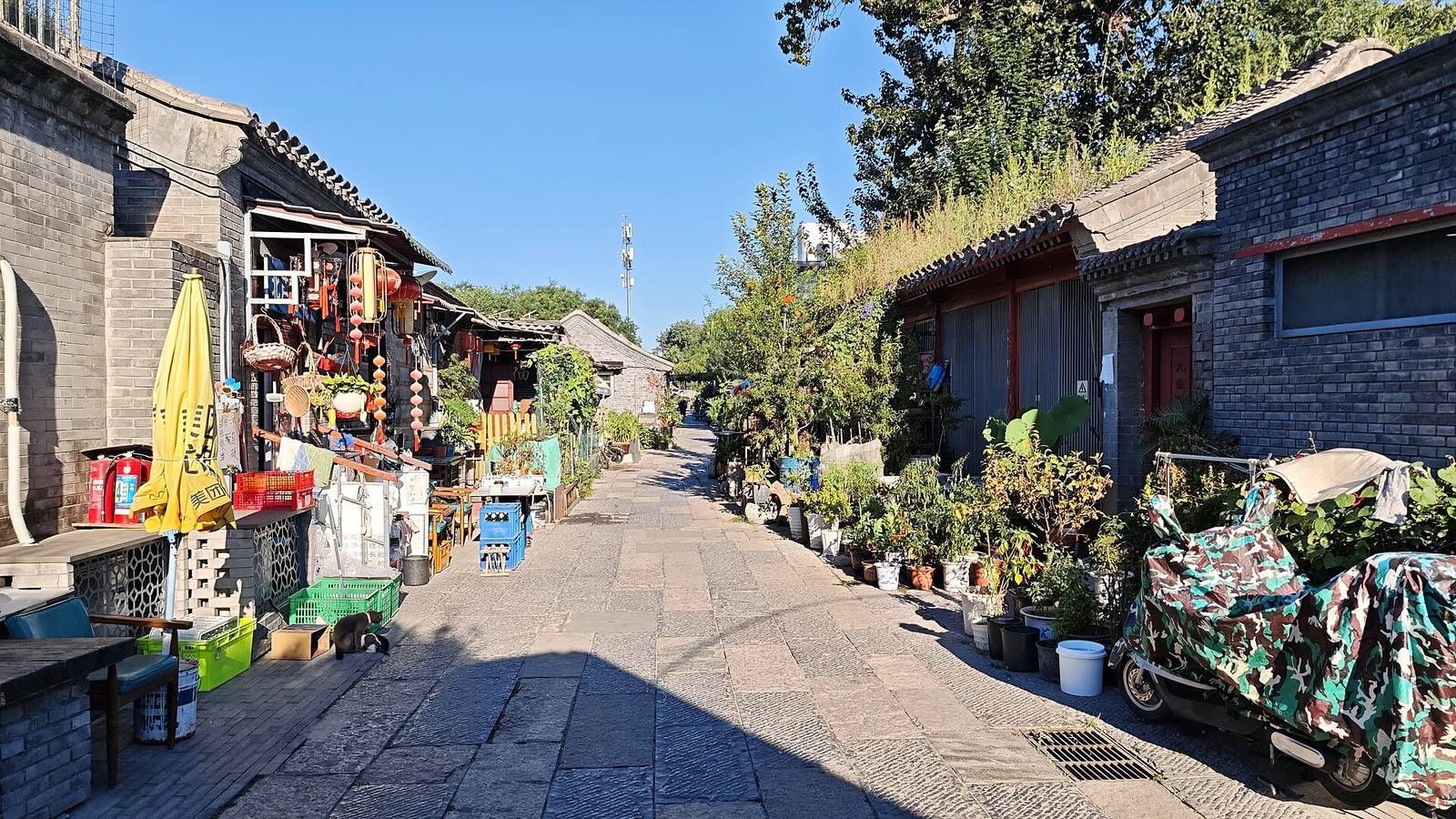
- beijing's center still follows the grid kublai khan laid out in the 1260s — the hutongs are the alleys of that plan.
- best base for a first trip: a courtyard hotel in the gulou / shichahai hutongs, or near qianmen if you want to walk to the forbidden city.
- stay in sanlitun for nightlife and english menus; visit 798 and the temple of heaven, don't sleep there.
- the temple of heaven at 7am, when the whole neighborhood is doing tai chi, is one of the best free things in china.
shanghai is a city of eras stacked side by side. beijing is a city of plans. it was laid out on purpose, by emperors, as a diagram of how the universe should be ordered — and then 20th-century beijing grew around that diagram in rings.
that means beijing’s neighborhoods feel different for very specific reasons: who was allowed to live inside which wall, which gate the merchants were pushed out of, where the government put the foreigners. here are the five areas worth your time on a first trip, mapped by how old they feel and how loud they get.
the beijing vibe map
tap a neighborhood. placement is our vibe read, not science.
drum & bell tower hutongs 鼓楼 · 什刹海
the old city clock, gray-tiled alleys and a lake
the backstorywhen kublai khan laid out his capital, dadu, from 1267, he gridded it into alleys that the mongol-era city called hutong (maybe from a mongolian word for 'well' — scholars still argue). the drum tower first went up here in 1272; the current one dates to the ming rebuild of 1420, and the stone bell tower behind it to 1745. drum and bell marked the city's hours, opening and closing the gates, until 1924. next door, the shichahai lakes were the end of the grand canal in yuan times, where grain barges from the south docked in the middle of the city.
you’ll love it ifanyone who wants to feel old beijing — wanderers, bike riders, courtyard-hotel romantics.
- drum towerclimb the steep stairs for the view over a sea of gray roofs; time it for a drumming performance if you can.
- yinding bridge & houhaiwalk to the little silver ingot bridge between the lakes, then loop houhai with the old guys fishing.
- the side hutongsget lost on purpose in the alleys between the lake and gulou dajie. this is the good stuff.
- zhajiangmianbeijing's noodle: thick wheat noodles, fermented bean-paste pork sauce, a pile of crunchy veg. ~$3–5.
- baodu (quick-boiled tripe) or a lamb skewerold-school beijing snack energy, sesame dip, cold beer. cheap and correct.
qianmen & dashilan 前门 · 大栅栏
the old merchant quarter, right outside the emperor's front door
the backstoryqianmen (zhengyangmen, 1419) was the main southern gate of the inner city. under the qing, the inner city was reserved for the manchu bannermen, and theaters, inns and teahouses were kept out — so all of that energy piled up just outside the gate. dashilan became beijing's shopping street: tongrentang has sold medicine since 1669, neiliansheng has made cloth shoes since the 1850s, ruifuxiang has sold silk since 1893. qianmen street got a heavy 2008 makeover with replica trams; the real texture is in the alleys west of it.
you’ll love it ifshoppers, old-brand nerds, and anyone who wants imperial beijing with a side of street food.
- zhengyangmen gatestart under the huge gate and its arrow tower at the south end of tiananmen square.
- dashilan streetthe 300-ish meters of laozihao (time-honored brands): silk, cloth shoes, herbal medicine, tea.
- yangmeizhu xiejie & liulichangdrift west down the skinny hutong to the old book-and-brush street at liulichang.
- peking duckquanjude opened its first shop here in 1864. tourist-y, yes, but eating it at the source is a vibe. ~$25–40 for a whole duck.
- luzhu huoshaoan offal-and-bread stew that is pure old beijing. brave, cheap, ~$4–6.
sanlitun 三里屯
embassies by day, the whole city out by night
the backstoryin the 1960s this patch of chaoyang was set aside as beijing's second embassy district, and it still is — walk the side streets and you'll pass flags and guard posts. foreign diplomats and students meant foreign tastes, so in the 1990s a 'bar street' grew here, one of the first real nightlife strips in the city. in 2008 the kengo kuma-designed taikoo li complex replaced most of the dive bars with glass, shops and the city's flashiest people-watching.
you’ll love it ifnight owls, design shoppers, and anyone craving a burger after a week of noodles.
- taikoo li souththe colorful glass boxes, the giant screens, the outfits. sit and people-watch.
- the embassy streetswalk north and east into the quiet tree-lined streets of embassies — a total mood change in two blocks.
- workers' stadiumend at the rebuilt stadium area; on match nights the whole neighborhood is green and loud.
- yunnan or xinjiang foodsanlitun has some of beijing's best regional restaurants hiding upstairs in office buildings. ~$10–20.
- craft beerbeijing's craft beer scene is real and it lives around here. ~$6–9 a pint.
798 art district 798艺术区
bauhaus factories turned into china's art capital
the backstoryin the 1950s, east germany helped china build joint factory 718, an electronics complex designed by an institute in dessau — the same city as the bauhaus, and it shows: long halls under sawtooth roofs of curved concrete, with tilted windows facing north for soft, even light. production started in 1957. by the '90s the factories were winding down, a sculpture department of the central academy of fine arts moved in for the cheap space, and from around 2002 galleries followed; ucca, the big one, opened in 2007. mao-era slogans are still painted on some of the ceilings.
you’ll love it ifart lovers, photographers, architecture people, and anyone who needs a break from temples.
- ucca center for contemporary artstart at the district's anchor museum; check what's on, there's usually a big show.
- the sawtooth hallsfind the galleries still under the original saw-tooth roofs — look up for the old slogans.
- the old pipes & rail trackswander the industrial leftovers: steam pipes, chimneys, locomotives, sculpture everywhere.
- a café in an old workshopconcrete, plants, good light, decent coffee. ~$4–6.
- jianbing on the way inthe beijing breakfast crepe: egg, crispy cracker, sauce, scallions. under $2.
temple of heaven (tiantan) 天坛
where emperors prayed for harvests and grandpas now play cards
the backstorybuilt under the yongle emperor and finished in 1420 — the same years as the forbidden city — this was where the emperor came each year to pray to heaven for a good harvest. the round, triple-roofed hall of prayer for good harvests is actually a rebuild: lightning burned the original in 1889, and it was reconstructed in the 1890s to the old design. today the huge cypress-shaded park around it belongs to the neighborhood: tai chi, ballroom dancing, choirs, card games, every morning.
you’ll love it ifearly risers, people-watchers, and anyone who wants imperial grandeur without the forbidden city crush.
- the long corridor (east gate)enter by the east gate early and walk the covered corridor where locals play cards, sing and knit.
- hall of prayer for good harveststhe round blue-roofed hall, famously built without nails. the photo is unreal in the morning.
- circular mound altarwalk south down the raised imperial path to the open marble altar; stand on the center stone and talk.
- jiaozi (dumplings)the old residential streets around the park have no-frills dumpling shops. ~$3–5 a plate.
- douzhi & jiaoquanthe infamous fermented mung-bean drink with fried dough rings. very beijing. you might hate it. ~$2.
tap any neighborhood for a three-hour walk, what to eat, the metro stop and the backstory. now the story behind the map.
the grid that named the hutongs
in 1267, kublai khan — grandson of genghis — started building a new capital here called dadu (“great capital”), or khanbaliq to the mongols. it was a planned city: a square, walls on every side, the palace in the middle, and a rigid grid of streets with narrow lanes running between them.
those lanes got a name in the yuan dynasty: hutong. the most common theory is that it comes from a mongolian word for a water well, since neighborhoods clustered around wells. some linguists argue for a different mongolian root meaning a narrow passage. either way, the word is about 750 years old, and so is the street pattern in the old core.
the ming emperors rebuilt and moved the walls, and the yongle emperor built the forbidden city and the temple of heaven by 1420, but they kept the grid. that’s why, when you look down from the drum tower today, you see the same arrangement: a sea of gray-tiled roofs, cut into neat strips by alleys.
siheyuan: the house that makes the hutong
the hutong is just the alley. what makes it is the siheyuan — a courtyard house with four buildings facing inward around an open square. the main hall faces south for sun; the gate is usually in the southeast corner; a screen wall inside the gate blocks the view (and, by tradition, evil spirits, which supposedly can’t turn corners).
from the street, a siheyuan is just a gray wall and a red door. inside, there’s a jujube tree, a birdcage, someone’s grandma doing laundry. after 1949 most were split up among many families, so “one courtyard, one family” became “one courtyard, eight families and a shared kitchen.” many have since been restored — some are boutique hotels now, which is how you get to sleep in one.
qianmen: the merchants outside the gate
when the manchu qing dynasty took beijing in 1644, the inner city was assigned to their bannermen, and theaters, inns and teahouses were kept outside. so the energy of the city — the merchants, the opera, the shops — piled up just south of qianmen, the main front gate on the beijing central axis.
that’s how dashilan became beijing’s original shopping street. the brands there are old: tongrentang has sold medicine since 1669, neiliansheng has made cloth shoes since the 1850s, ruifuxiang has sold silk since 1893. quanjude, the famous peking duck restaurant, opened its first shop nearby in 1864. (how to order duck and everything else is in our chinese food guide.) qianmen street itself was heavily rebuilt before the 2008 olympics (the trams are replicas), but the hutongs to the west are still a real neighborhood.
798: east germany’s bauhaus in beijing
in the 1950s, east german engineers helped china build a huge electronics complex northeast of the city called joint factory 718. it was designed by an institute in dessau, the same town as the bauhaus school, and it looks like it: long halls under curved, sawtooth concrete roofs, with slanted windows facing north so workers got soft, even light without glare. it opened in 1957.
by the 1990s the factories were winding down. artists moved in for the cheap space and the light, and from around 2002 galleries followed. now 798 is china’s best-known art district, anchored by ucca (2007). look up in some of the halls and you’ll still see mao-era slogans painted on the ceilings.
sanlitun: built for diplomats
in the 1960s beijing set aside this area as its second embassy district, and it still is. foreign diplomats and students brought foreign tastes, and in the 1990s sanlitun grew one of the city’s first real bar streets. in 2008 the kengo kuma–designed taikoo li complex replaced most of the dive bars, and now it’s beijing’s showroom: glass, flagship stores, and the best people-watching in the city.
why the temple of heaven, and not wudaokou
for the fifth spot we went back and forth between wudaokou and the temple of heaven. wudaokou is the university district near tsinghua and peking university, packed with korean food, cheap bars and students — a lot of fun if you’re studying mandarin or staying a month. but for a first-time visitor it’s mostly a far-out residential area with a great nightlife strip.
the tiantan area wins because it gives you two things at once. there’s the history: the yongle emperor built it by 1420, and the round hall of prayer for good harvests is where emperors prayed for crops (the current hall is an 1890s rebuild after a lightning fire in 1889). and there’s the life: every morning, the park fills with neighbors doing tai chi, singing, dancing and playing cards. it’s the most beijing hour you can have.
brandon here. i went at 7am once, half-awake, and walked into a line of maybe 40 retirees doing a fan dance to a bluetooth speaker. a grandpa waved me in. i did not know the moves. nobody cared. best morning of the trip.
where to stay in beijing, by vibe
| if you want… | stay in | why |
|---|---|---|
| old beijing, courtyard hotels | gulou / shichahai | hutongs, the lake, bikes, the drum tower |
| walk to the forbidden city | qianmen | right by tiananmen, lots of mid-range hotels |
| nightlife and english menus | sanlitun | bars, restaurants, design hotels |
| calm and cheaper | near tiantan | park mornings, line 5 into town |
| art for an afternoon | 798 (visit only) | it’s far out — don’t base yourself here |
most first-timers should pick gulou or qianmen. both put you close to the forbidden city, and both feel like beijing in a way the glass-tower districts don’t.
book the forbidden city in advance — tickets are timed and capped, and they can sell out days ahead in peak season.
and if the great wall is on your list, most day trips pick up in the central districts above.
still deciding between cities? see beijing vs shanghai and our shanghai neighborhoods compared.
the vibe check
beijing makes sense once you see the plan. the hutongs are kublai khan’s grid. the drum tower is the old city’s clock. qianmen is where the merchants ended up when the qing kept them out of the inner city. 798 is a bauhaus factory turned art capital. sanlitun is where the diplomats went. and the temple of heaven is where emperors prayed — and where the neighborhood now does its morning stretches.
stay in the hutongs if you can. wake up early at least once. and rent a bike. lowkey, that’s the whole trip.
the kit for this trip
heads up: some links above are affiliate links. if you book through them we earn a small commission at no extra cost to you — it keeps this guide free. more on that.