what to eat
every city, and how to order it
point at the picture. it’s fine. everyone does.
- "chinese food" is like 8 different cuisines in a trench coat. eat what each city is famous for, not the same dishes everywhere
- most restaurants now have you scan a qr code on the table to order. camera-translate the menu and pay with alipay or wechat
- hotpot first-timers: get the split pot (鸳鸯锅), order mild (微辣), and don't drink the red broth
- screenshot the diet phrases below. 我不吃辣 (wǒ bù chī là) means "i don't eat spicy"
- local food is cheap. a great bowl of noodles is usually around $2–4
the chinese food you grew up with is basically one dialect of a language with dozens. in china, the food changes completely every few hundred kilometers. beijing is wheat, lamb and duck. shanghai is sweet and soy-braised. sichuan will make your mouth go numb on purpose.
the best trip strategy is simple: eat what each city is famous for. here’s what to order where, how the qr-code ordering thing works, how to survive hotpot, and the diet phrases to screenshot.
the big regional styles, fast
| region | vibe | you’ll find it in |
|---|---|---|
| northern / beijing | wheat (noodles, dumplings, buns), lamb, roast duck, salty and hearty | beijing, xi’an |
| jiangnan / shanghai | sweet-savory, soy-braised, delicate soup dumplings | shanghai, hangzhou, suzhou |
| sichuan | 麻辣 (málà): numbing sichuan pepper + chili, layered and bold | chengdu |
| chongqing | sichuan’s louder sibling. beef-tallow hotpot, extra fire | chongqing |
| northwest / shaanxi | hand-pulled noodles, cumin lamb, flatbreads, hui muslim influence | xi’an |
| guangxi | rice noodles, sour and pickled flavors, river fish | guilin, yangshuo |
| cantonese | dim sum, roast meats, clean flavors (not on this route, but you’ll see it everywhere) | guangzhou, hong kong |
what to eat in beijing
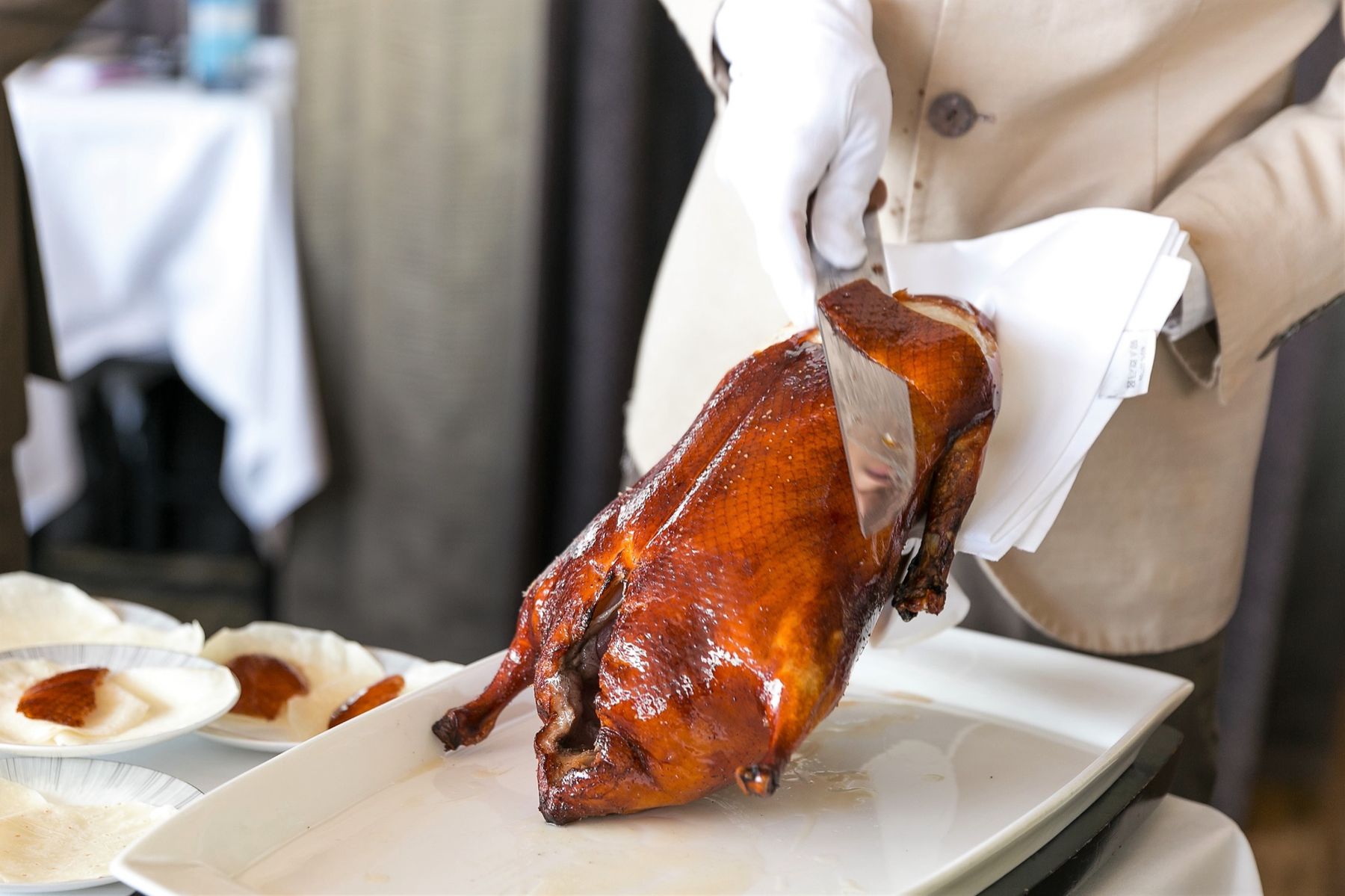
- peking duck (北京烤鸭, běijīng kǎoyā). crispy skin, thin pancakes, scallions, sweet sauce. a whole duck at a well-known place usually runs about $30–60 and feeds 2–4 people
- zhajiangmian (炸酱面). thick noodles with fermented soybean pork sauce and crunchy veg. the cheap, perfect lunch
- copper-pot lamb hotpot (涮羊肉, shuàn yángròu). a clear broth, paper-thin lamb, and sesame dipping sauce. this is beijing’s hotpot, and it’s very different from sichuan’s
- jianbing (煎饼). the crepe-egg-crispy-cracker breakfast from a street cart, for around $1.50
- for the brave: douzhi (豆汁), fermented mung bean drink. it’s sour, funky, and locals are lowkey proud when you hate it
more in our beijing guide.
what to eat in shanghai
- xiaolongbao (小笼包). soup dumplings, one branch of the chinese dumpling family tree. bite a small hole, sip the soup, then eat. do not bite the whole thing at once, because the soup is lava
- shengjianbao (生煎包). pan-fried soup buns with crispy bottoms. same lava rules apply
- hongshao rou (红烧肉). red-braised pork belly, sticky, sweet and glossy. the shanghai home-cooking classic
- scallion oil noodles (葱油拌面, cōngyóu bànmiàn). simple, cheap and kind of perfect
- hairy crab (大闸蟹). it’s in season in autumn, roughly october to november. it’s a whole ritual, and pricey, but very shanghai
see the shanghai guide for neighborhoods to eat in.
what to eat in chengdu
chengdu is a unesco “city of gastronomy” and the capital of 麻辣 (málà). the numbing feeling is sichuan peppercorn, not chili, and it’s supposed to happen.
- mapo tofu (麻婆豆腐). silky tofu, minced beef, chili oil and numbing pepper. it’s on every menu, and the real version is a revelation
- dan dan noodles (担担面). small bowls of noodles with chili oil, pork and peanuts. nothing like the soupy versions abroad
- chuan chuan (串串). skewers you cook yourself in a hotpot, then pay by the stick. it’s cheaper and more chaotic than hotpot
- zhong dumplings (钟水饺) in sweet-spicy chili oil, and tianshuimian (甜水面), thick sweet-spicy noodles
- twice-cooked pork (回锅肉, huíguōròu). it’s the comfort dish, and the mildest thing on most menus
pair it with the chengdu guide (pandas in the morning, hotpot at night is the move).
what to eat in chongqing
chongqing is where hotpot gets serious: thick beef-tallow broth, a nine-square grid pot, and a dining room full of steam at midnight.
- chongqing hotpot (重庆火锅). order beef tripe (毛肚, máodù), duck intestine and potato slices. see the survival section below
- chongqing xiaomian (重庆小面). the city’s breakfast. it’s a small bowl of spicy noodles for around $1.50, eaten standing up
- laziji (辣子鸡). fried chicken bits buried in a mountain of dried chilies. dig for the chicken, don’t eat the chilies
- suanla fen (酸辣粉). sweet potato noodles, sour and spicy, from a street stall
the chongqing guide has the best night-food streets.
what to eat in xi’an
xi’an’s food is northwest china meets silk road. head to the muslim quarter (回民街, huímín jiē) at night, but the side streets are usually better and cheaper than the main drag.
- roujiamo (肉夹馍). the “chinese burger”, which is chopped braised meat in a crispy flatbread. the muslim quarter version is beef or lamb
- biangbiang noodles (biangbiang面). belt-wide hand-pulled noodles with chili oil splashed with hot oil. the character for “biang” is famously one of the most complex in chinese
- yangrou paomo (羊肉泡馍). you tear flatbread into tiny pieces, then they cook it in lamb soup. it’s slow food, and the tearing is part of it
- liangpi (凉皮). cold, chewy noodles with chili, vinegar and sesame. perfect for a hot day
more in our xi’an guide, and every regional noodle lives on one map in the china noodle atlas.
what to eat in guilin + yangshuo
- guilin rice noodles (桂林米粉). round rice noodles, braised meat, peanuts and pickles. you often add your own toppings at a self-serve bar. it’s a cheap breakfast, often about $2
- beer fish (啤酒鱼, píjiǔ yú). yangshuo’s signature dish. river fish braised in local beer with tomato and chili. it’s priced by weight, so confirm the price before they cook it
- stuffed everything (酿, niàng). snails, tofu or vegetables stuffed with minced pork. very guangxi
- luosifen (螺蛳粉) is from nearby liuzhou. the river-snail noodle soup smells unhinged (affectionate) and tastes amazing
see guilin + yangshuo for the river side of the trip.
how to order with a qr code (扫码点餐)
in big cities most restaurants now have a qr code on the table instead of a waiter with a notepad. here’s the flow:
- scan the table code with alipay or wechat. it opens a mini-program, which is almost always in chinese
- translate it. use wechat’s translate button, or point a camera-translate app (apple translate, google translate with an esim, baidu translate) at your screen. honestly, the food photos do most of the work
- add dishes, choose spice levels and options, then submit
- pay, either right away or at the end, through alipay or wechat pay with your linked foreign card
a few things that confuse first-timers:
- dishes are shared family-style. order about one dish per person, plus rice (米饭, mǐfàn), which is often ordered separately. invited to a proper round-table dinner? skim chinese banquet etiquette first
- tipping isn’t a thing in mainland china
- the under-$1 per-person charge you sometimes see is usually for tea or tableware (that plastic-wrapped cup and plate set). it’s normal
- to get the bill: “买单 (mǎidān)!”
hotpot survival guide
hotpot is the most fun meal in china and also the easiest one to get wrong (we learned the hard way during a full week of chongqing hotpot). here’s how not to cry:
- get a split pot. ask for 鸳鸯锅 (yuānyāng guō). it’s half spicy, half mild broth, so you can tap out
- choose your heat. 微辣 (wēi là) means mild. in chongqing, “mild” is still spicy. consider yourself warned
- build your sauce. chengdu and chongqing style is sesame oil + garlic + cilantro + scallions, which cools the spice. beijing style is sesame paste. the sauce bar is often a small per-person fee
- know your cook times. paper-thin meat takes about 10–20 seconds. for beef tripe (毛肚), locals say 七上八下 (qī shàng bā xià), “seven up, eight down”. dip it 7–8 times and eat it while it’s crunchy. potatoes and lotus root need a few minutes
- don’t drink the red broth. it’s mostly oil. drink the mild side, or order soy milk (豆奶) or herbal tea to cool down
- haidilao (海底捞) is the chain to start with. it often has picture or english menus, gives you free snacks while you wait, and staff are famously helpful. it’s not the most local option, but it’s training wheels
camera-translating menus, finding restaurants on dianping, paying by qr: all of it needs data. a roaming esim keeps google translate and lens working too. more in internet in china, and the full app list is in china travel apps.
dietary restriction phrases (screenshot these)
show the screen rather than trying the tones. no cap, it works better.
| you want to say | chinese | pinyin |
|---|---|---|
| i don’t eat spicy food | 我不吃辣 | wǒ bù chī là |
| mild spicy, please | 微辣 | wēi là |
| i’m vegetarian | 我吃素 | wǒ chī sù |
| no meat, including meat broth | 不要肉,也不要肉汤 | bú yào ròu, yě bú yào ròu tāng |
| i don’t eat pork | 我不吃猪肉 | wǒ bù chī zhūròu |
| i don’t eat beef | 我不吃牛肉 | wǒ bù chī niúròu |
| halal | 清真 | qīngzhēn |
| i’m allergic to peanuts | 我对花生过敏 | wǒ duì huāshēng guòmǐn |
| i’m allergic to seafood | 我对海鲜过敏 | wǒ duì hǎixiān guòmǐn |
| i’m allergic to eggs | 我对鸡蛋过敏 | wǒ duì jīdàn guòmǐn |
| i can’t eat wheat or gluten | 我不能吃小麦和面筋 | wǒ bù néng chī xiǎomài hé miànjīn |
| no cilantro | 不要香菜 | bú yào xiāngcài |
| no msg | 不要味精 | bú yào wèijīng |
| does this have meat in it? | 这个有肉吗? | zhège yǒu ròu ma? |
hospitals in china generally want payment upfront, so if you’ve got a serious allergy, travel insurance isn’t optional.
the vibe check
- eat regionally. duck in beijing, soup dumplings in shanghai, mapo tofu in chengdu, hotpot in chongqing, noodles in xi’an, rice noodles in guilin
- qr ordering: scan, translate, tap, pay. ask for a 菜单 if you get stuck
- hotpot: split pot, 微辣, sesame oil dip, don’t drink the red side
- screenshot the phrase table. 我不吃辣 might be the most useful sentence of your trip
- budget: local meals are cheap, often $2–9. save the splurge for duck and hairy crab
hungry for the full route? see our first-time china itinerary and the china travel budget. it’s giving eat-your-way-across-the-country, and that’s the whole point.
the kit for this trip
heads up: some links above are affiliate links. if you book through them we earn a small commission at no extra cost to you — it keeps this guide free. more on that.