a teahouse afternoon
one bamboo chair, three hours, zero plans
the tea's refillable. so is your patience, turns out.
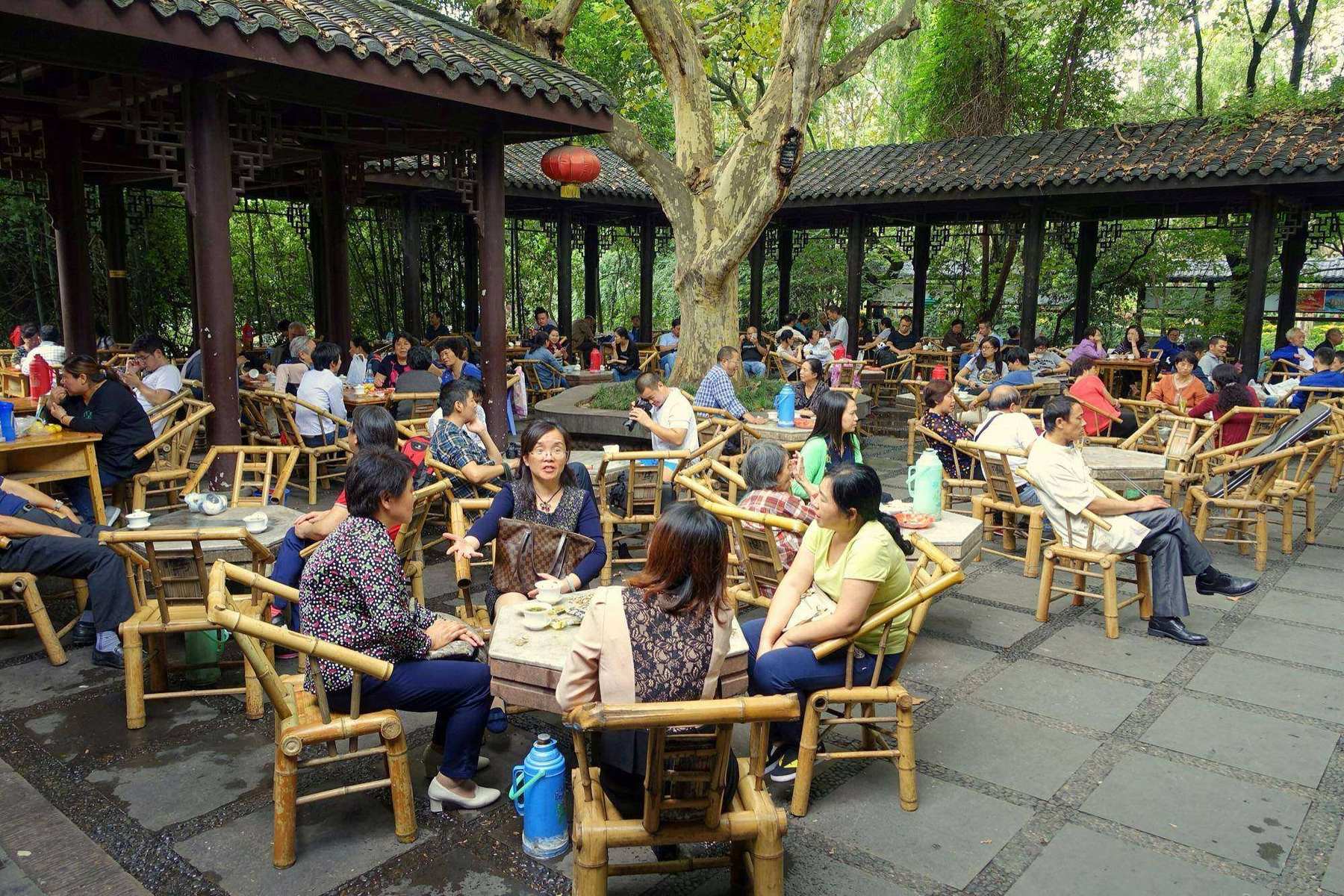
- heming teahouse (鹤鸣茶社) in people's park is the classic chengdu teahouse. park entry is free, tea is roughly $2–6 as of late 2026
- you pay once, then staff or a thermos keep refilling your hot water. stay as long as you want, that's the whole point
- ear cleaning is a real thing here, usually around $5–7. agree on the price first
- go on a weekday afternoon for calm, or a weekend for maximum people-watching
- the real lesson: schedule one unscheduled afternoon per city. it's not wasted time
by day nine of my second china trip, i was a husk. i’d done beijing, xi’an and a red-eye-ish train, with a spreadsheet that had stuff scheduled in 30-minute blocks. i’d seen a lot. i couldn’t tell you how any of it felt.
i got to chengdu with a plan for the afternoon that included three temples (the kind how to read a chinese temple decodes), a museum and “maybe pandas if time.” instead, i sat down in a bamboo chair at a teahouse in people’s park for about three hours and did basically nothing.
it was the best afternoon of the whole trip. here’s what happened, and how to do it yourself.
the over-scheduled trip problem
i think a lot of first-timers do what i did. china is huge, the flights are long, and you feel like you have to justify the trip by seeing everything.
so you stack it. great wall at 7am, terracotta warriors the next day, overnight-ish travel, repeat. it looks amazing on paper. in reality, by the second week, i was walking past incredible things and just thinking about where to charge my phone.
if you’re building an itinerary right now, the first-time china itinerary has the pacing i wish i’d used. spoiler: fewer cities, more nights in each.
how i ended up at heming teahouse
i’d walked into people’s park (人民公园, rénmín gōngyuán) because it was on the way to temple number one. it’s a big leafy park right in central chengdu (see chengdu neighborhoods for the area around it), free to enter, and on that day it was packed with people dancing, singing, doing tai chi and playing cards.
then i heard it before i saw it: the click-clack of mahjong tiles and a low hum of a few hundred conversations. that’s heming teahouse (鹤鸣茶社, hèmíng cháshè), a lakeside teahouse that’s been around since the 1920s. hundreds of bamboo chairs, low tables and big trees, right by the water.
i was going to take one photo and leave. a staff member waved at an empty chair. i sat down. that was it for the afternoon.
how ordering tea at a chengdu teahouse works
this confused me at first, so here’s the deal:
- grab a seat first. just sit at any open table. staff will come to you, or you’ll see a counter where people order and pay
- choose a tea. the menu is usually a board with prices. jasmine (茉莉花茶, mòlìhuā chá) and green teas are the cheap classics. fancier teas cost more
- pay once. at heming, tea runs roughly $2–6 per cup as of late 2026, depending on what you pick. pay by alipay or wechat pay. see alipay & wechat pay if you haven’t set that up
- refills are included. you’ll get a gaiwan (盖碗), a lidded cup with a saucer, and either a big thermos of hot water or staff who come around to top you up. you can sit for hours on one cup
the gaiwan has three parts: the saucer, the cup and the lid. you don’t take the leaves out. you use the lid to push them back while you sip through the gap. i spilled tea on my shirt the first three tries. by the fourth i was basically a local (i was not a local).
getting your ears cleaned in chengdu (yes, really)
about 30 minutes in, a man walked by clinking a pair of metal tweezers together. that ringing sound is the signal for ear cleaning (采耳, cǎi’ěr), a very old chengdu teahouse tradition.
i’d read about it, i was nervous, and i did it anyway. he pointed at a laminated price card that worked out to around $5–6, plus a small tool fee. i nodded.
what followed was 15 minutes of the strangest relaxation of my life. there’s a tiny light on his forehead, a set of thin picks and scoops, and a feather-tipped tool he spins near your ear. then there’s a tuning fork he taps and holds next to your ear, which buzzes through your whole skull. it’s pure asmr. i went from “this is weird” to “this is the most relaxed i’ve been in nine days” in about four minutes.
the practical bits:
- expect around $5–7 at a park teahouse, but confirm the price before they start. show it on your phone if you need to
- it’s done by licensed or practiced pros in their own equipment kits. if you have ear problems, a recent ear infection or ear tubes, skip it
- it’s totally fine to say no. a polite “不用,谢谢” (bú yòng, xièxie, no need, thanks) works
watching mahjong (and not understanding it)
the table next to mine had four retirees playing mahjong. they were fast, loud and absolutely ruthless. the tiles got slammed, flipped and swept around in a way that made it clear they’d played every week for about 40 years.
i understood nothing. it didn’t matter. sichuan mahjong uses its own rules, and watching it is more about the rhythm than the game.
at one point, a guy at the table caught me watching, held up a tile and raised his eyebrows. i shrugged. he laughed and said something to his friends, and they all laughed, and then he went right back to destroying them. that was our whole interaction. it was perfect.
if you want to actually learn, some local tours and hostels run mahjong intro sessions. but honestly, watching is enough.
the lesson: travel slower than you think
somewhere in hour two i realized i hadn’t checked my itinerary once. i’d watched a toddler chase pigeons, a couple argue about cards, a teenager play the erhu badly and then very well, and about 40 refills of hot water.
i didn’t see the three temples that day. i don’t regret it at all.
here’s what changed for every trip after that one:
- one empty afternoon per city. no plan, no bookings. just a park, a teahouse, a long walk, whatever
- fewer cities. chengdu deserves 3 days, not 1.5. the chengdu guide has how to split them
- book the big stuff in the morning. pandas early, temples early, then let the afternoon happen
- don’t travel in the hottest months if you can avoid it. half of my exhaustion was sweating through a heatwave. the best time to visit china guide breaks down why spring and fall are lowkey the move
i’ve stayed near kuanzhai xiangzi (wide and narrow alley) on every chengdu trip since. people’s park is walkable from there, and so is a lot of good food.
when to go to heming teahouse
- weekday afternoons are the sweet spot. calm, lots of open seats, mostly locals
- weekends are busier and louder, which is great for people-watching. the park’s famous marriage market, where parents post their kids’ profiles on umbrellas, is usually busiest on weekend afternoons
- hours vary by source, roughly morning to evening. as of late 2026, plan for mid-morning to around sunset and double-check on amap or dianping before you go
- avoid national holidays (especially early october). the whole park gets packed
- getting there: take metro line 2 to people’s park station (人民公园站). the teahouse is inside the park by the lake
bring a portable charger and a book, or don’t. both work.
other chengdu teahouses worth an afternoon
heming is the classic, but it’s not the only one:
| teahouse | vibe | rough tea price |
|---|---|---|
| heming teahouse, people’s park | lakeside, lively, ear cleaning, mahjong | ~$2–6 |
| wenshu monastery teahouse | inside a working buddhist temple. quiet and leafy | ~$1.50–3 |
| guanyin pavilion old teahouse, pengzhen | a 100+ year old, smoky, unpolished teahouse in shuangliu, about an hour out. photographers love it | ~$1.50 |
| any neighborhood teahouse | plastic chairs, mahjong, nobody speaks english, zero tourists | often $1.50–3 |
the pengzhen one is a trek, and it opens very early (locals show up at dawn), but if you love old-school places, it’s worth a half day. as always, prices drift, so treat these as ballparks.
a few practical notes
- cash is rarely needed. alipay or wechat pay works everywhere, including for ear cleaning
- bring a light layer. chengdu is often overcast and it can get cool by the water
- bathrooms are in the park, not always the cleanest. carry tissues
- the tea is hot. like, very hot. let it sit a minute before you go gaiwan-sipping
- get travel insurance before the trip. not because of the tea, but because i’ve now had one sprained ankle on chengdu’s wet stone paths
the vibe check
i went to chengdu with a spreadsheet and left with a theory: the best travel memory isn’t always the big sight, it’s the afternoon you didn’t plan.
go to people’s park, sit down at heming teahouse, order a jasmine tea, let them refill it until the sun goes down. watch the mahjong, get your ears cleaned if you’re brave, and leave the temples for tomorrow. they’ll still be there. trust.
the kit for this trip
heads up: some links above are affiliate links. if you book through them we earn a small commission at no extra cost to you — it keeps this guide free. more on that.