festivals through the year
ten festivals, one lunar loop
plan around golden week, not around the festivals.
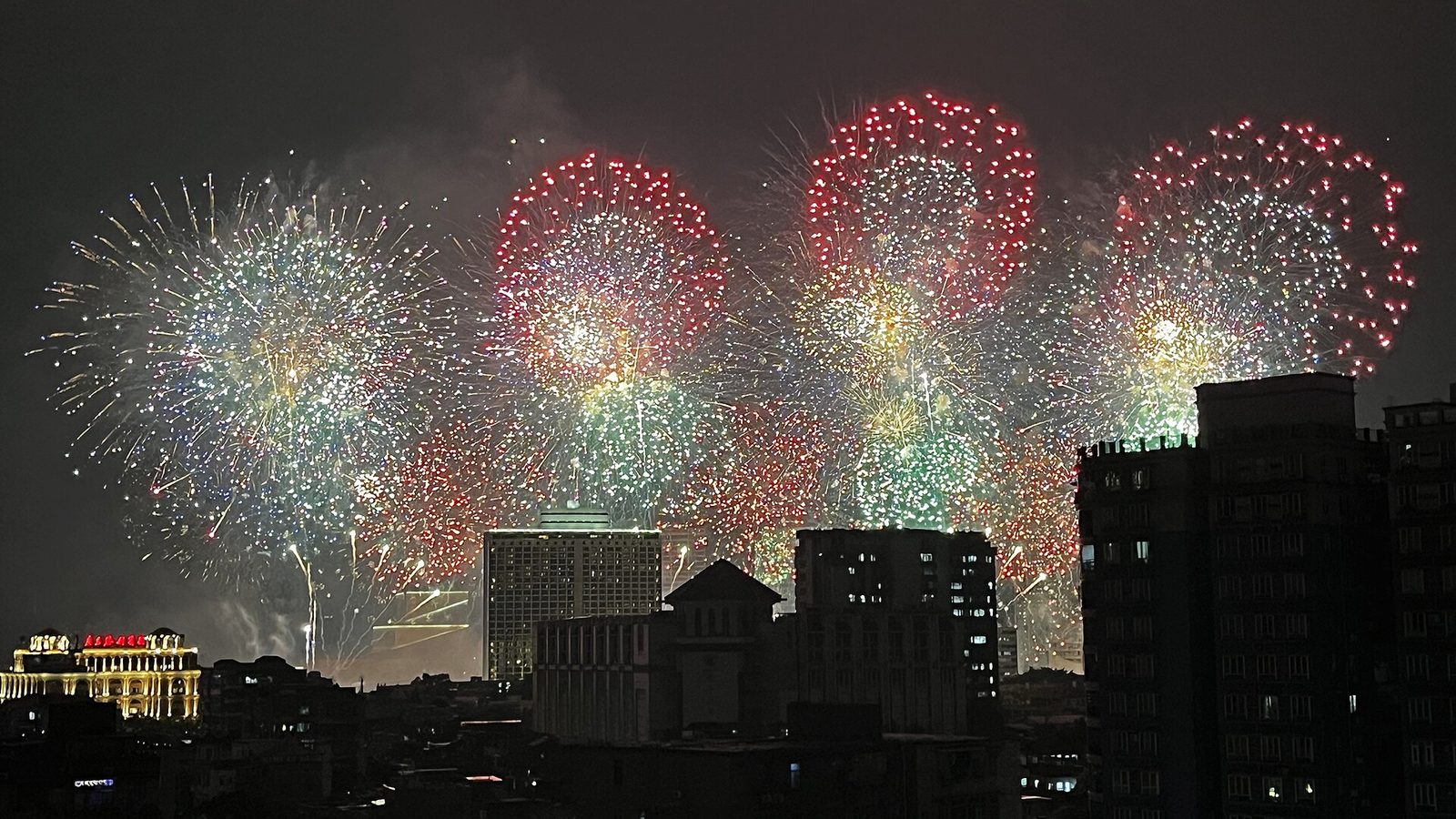
- most chinese festivals follow the lunar calendar, so their gregorian dates move every year — spring festival 2026 was feb 17; in 2027 it's feb 6.
- public holidays (and travel crushes): spring festival, qingming, dragon boat, mid-autumn — plus labor day (may 1) and national day (oct 1), which aren't traditional festivals.
- best festivals to actually see as a traveler: lantern festival (zigong, nanjing), dragon boat races (guangzhou, hong kong), mid-autumn moon-viewing.
- spring festival is magical and also the hardest week of the year to travel. book trains weeks ahead or skip the first few days.
china runs on two calendars. the gregorian one tells you when your flight leaves. the lunar one tells you when your friends will disappear for a week to their hometowns, when every bakery fills with mooncakes, and when an entire riverbank turns into a drum-pounding dragon boat race.
the traditional year is a loop of festivals, most of them two thousand years old, all of them with a legend attached and a specific food you’re expected to eat. here’s the whole loop, in order, with the 2026 dates, the real history, the stories people tell, and what any of it means for your trip.
the chinese festival calendar, walked through
- lunar 1/1 · feb 17, 2026han dynasty (104 bc calendar) · roots much older
spring festival 春节
the new year has been pinned to the first lunar month since emperor wu of han's taichu calendar in 104 bc, and the name 'spring festival' only arrived in 1914, when the new republic gave the gregorian jan 1 the 'new year' title. the legend (and it is a legend) is the nian, a beast that came out every new year's eve to eat crops and kids until people learned it feared three things: the color red, fire, and loud noise. hence red couplets on every door, lanterns, and firecrackers at midnight. in 2024 unesco added the spring festival to its intangible heritage list.
look for → red couplets and an upside-down 福 (fu, 'luck' — 'upside down' sounds like 'arrived'), a huge new year's eve reunion dinner with fish (yu sounds like 'surplus'), dumplings in the north, and the cctv spring festival gala on tv since 1983. red envelopes are mostly digital now: wechat launched them in 2014 and families 'grab' red packets in group chats all night. temple fairs (miaohui) run for days after — beijing's ditan park fair is the classic.
the world's biggest annual migration (chunyun): trains sell out weeks ahead and many small shops close for the first ~3–7 days. big cities go eerily quiet; go for temple fairs and lanterns, book everything early. next one: feb 6, 2027.
photo: storyvillegirl · CC BY-SA 2.0 - lunar 1/15 · mar 3, 2026han dynasty origins · huge by the tang
lantern festival 元宵节
the first full moon of the year closes out new year season. tradition traces the lamp-lighting to the han court (one popular story credits emperor ming of han, who is also linked to buddhism's arrival, but that's tradition more than documented fact). by the tang dynasty, chang'an lifted its strict night curfew for these few nights so the whole city could wander under the lanterns — one of the only times ordinary people were allowed out after dark. for centuries it was also a rare night young people could meet in public, which is why it's sometimes called the original chinese valentine's day.
look for → giant lantern displays, lantern riddles (caidengmi) pinned under lanterns, lion and dragon dances, and sweet glutinous rice balls: northerners roll them in powder and call them yuanxiao, southerners wrap the filling by hand and call them tangyuan. yes, people will argue about which is correct.
the big lantern shows run for weeks around the date. zigong in sichuan is the lantern capital (roughly an hour from chengdu by high-speed train); nanjing's qinhuai lantern fair at fuzimiao is the other classic. expect wall-to-wall crowds — go on a weeknight.
photo: Yosomono from Fukuoka, Japan · CC BY 2.0 - solar term · apr 5, 2026zhou-era cold food custom · tang made it official
qingming (tomb sweeping day) 清明节
qingming ('clear and bright') is one of the 24 solar terms, which is why it's always april 4–6. it swallowed an older festival, hanshi (cold food day), when no fires were lit. the legend behind that one: jie zitui, a loyal follower of duke wen of jin in the spring and autumn period, who hid in a forest with his mother rather than take a reward; the duke set the forest on fire to smoke him out and he died, so the duke banned fires on that day in his memory. the tang court made grave visits at this time officially sanctioned, and it's been the main day for honoring ancestors ever since.
look for → families sweep and weed graves, leave food, flowers, wine and incense, and burn joss paper (spirit money — and these days paper iphones and paper cars) for the ancestors to use. in hokkien and teochew communities you'll see bright colored papers laid over the grave mound, like in this photo from singapore's bukit brown cemetery. it's also a spring outing day: kite flying, and qingtuan (green mugwort rice balls) in the jiangnan region.
a public holiday since 2008, usually a 3-day weekend. trains and highways out of cities are busy, but tourist sights are fine. this is a family occasion — watch respectfully from a distance, don't photograph people at graves.
photo: Jacklee. · CC BY-SA 3.0 - lunar 5/5 · jun 19, 2026warring states (qu yuan, d. 278 bc) · older river rites
dragon boat festival 端午节
the famous story: qu yuan, a poet and minister of the state of chu, was exiled for opposing a doomed alliance and drowned himself in the miluo river around 278 bc when chu's capital fell. locals raced out in boats to find him, and threw rice into the water so the fish would eat that instead of his body — the legendary origin of dragon boats and zongzi. historians point out that dragon-boat rites and the fifth-month 'bad month' customs probably predate him, and in suzhou the day is tied to a different hero, wu zixu. unesco listed it in 2009.
look for → dragon boat races with drummers on the bow, mugwort and calamus hung on doors to ward off summer illness, five-color silk threads on kids' wrists, and zongzi — sticky rice wrapped in bamboo leaves. and the great debate: the north mostly eats them sweet (red bean, dates), the south savory (pork belly, salted egg yolk). this fight is eternal online.
a public holiday (usually 3 days). races happen on rivers all over the south — guangzhou, hong kong and miluo in hunan (qu yuan's river) are the big ones. zongzi run about $1–3 each anywhere.
photo: Peter Olshevsky · CC BY-SA 4.0 - lunar 7/7 · aug 19, 2026han dynasty · the legend is older
qixi 七夕
legend: zhinü, the weaver girl, a goddess who wove the clouds, fell in love with niulang, a mortal cowherd. the queen mother of the west dragged her back to heaven and scratched the milky way across the sky to keep them apart. once a year, on the seventh night of the seventh month, every magpie in the world flies up to form a bridge so they can meet. the two lovers are real stars — vega and altair, on either side of the milky way — and the stars already appear as weaver and ox-herd in the classic of poetry (shijing). by the han, women were celebrating it as 'begging for skills' night (qiqiao), threading needles by moonlight.
look for → today it's sold as 'chinese valentine's day': flowers, restaurant set menus, couples' selfies, and a spike in marriage registrations when the date is lucky. the needle-threading and weaving contests survive mostly as folk revivals. this painting is one of the thousands on the long corridor at beijing's summer palace.
not a public holiday. nice restaurants book out that night; otherwise it barely affects a trip. the summer palace long corridor (~$4–5 entry) is where to see the legend painted.
photo: shizhao (photo), painter unknown · Public domain - lunar 7/15 · aug 27, 2026southern dynasties buddhist & daoist merge (6th c.)
ghost festival 中元节
the whole seventh month is 'ghost month', when the gates of the underworld are believed to open and hungry ghosts — spirits with no descendants to feed them — wander. the 15th is the peak, and it's two traditions braided together: the daoist zhongyuan, birthday of the official of earth who forgives sins, and the buddhist ullambana (yulanpen), from the sutra story of mulian, a disciple of the buddha who rescued his mother from starving in hell by making offerings to monks. emperor wu of liang is credited with holding the first big yulanpen assembly in 538.
look for → offerings of food set out on the street for wandering spirits, joss paper burned in metal bins on sidewalks, floating river lanterns to guide souls, and outdoor chinese opera with the front row left empty for ghost guests. the biggest public versions are in hong kong (yu lan festival, like this one on ping chau island), taiwan, fujian and southeast asia; in most mainland cities it's quieter and family-based.
not a public holiday. traditional folks avoid swimming, moving house or whistling at night this month. don't step on or kick offerings on the sidewalk, and don't sit in the empty front row at an opera.
photo: Ws227 · CC BY-SA 4.0 - lunar 8/15 · sep 25, 2026tang moon-gazing · a full festival by the song
mid-autumn festival 中秋节
harvest moon, family reunion. tang poets wrote about this full moon constantly, and by the song dynasty it was a proper festival with night markets and moon-viewing parties. legend: the archer hou yi shot down nine of the ten suns scorching the earth and was given an elixir of immortality; his wife chang'e swallowed it (versions disagree on why) and floated up to the moon, where she lives with a jade rabbit pounding medicine. another popular story says rebels hid messages in mooncakes to coordinate an uprising against the yuan dynasty — fun, but historians treat it as folklore.
look for → mooncakes everywhere: classic lotus seed paste with a salted egg yolk 'moon' inside, five-nut, snow-skin, and now every brand has a version (starbucks, luxury hotels, even spicy hotpot flavor). families eat dinner together and go outside to look at the moon; kids carry lanterns. su shi's 1076 moon poem 'shui diao ge tou' gets quoted on every greeting card.
a public holiday. in some years it merges with the oct 1 national day golden week into one giant travel crush; in 2026 it's separate (sep 25). hong kong's victoria park lantern carnival and west lake in hangzhou are lovely for moon-viewing. mooncake boxes cost ~$5 to $50+.
photo: Shizhao · CC BY-SA 2.5 - lunar 9/9 · oct 18, 2026warring states roots · han legend
double ninth festival 重阳节
nine is the biggest yang (odd) number, so the ninth day of the ninth month is 'double yang' — powerful, and a bit dangerous. legend says huan jing, a man of the eastern han, was warned by his daoist teacher that disaster would strike on this day, so he took his family up a mountain carrying dogwood (zhuyu) and drinking chrysanthemum wine; when they came home, all their livestock had died in their place. hence climbing high. the tang poet wang wei wrote the most famous lines about it, missing his brothers far away, reportedly at seventeen.
look for → hiking up hills, chrysanthemum shows, chongyang cake (layered steamed cake, 'gao' sounds like 'high'). since 1989 it has also been china's day for the elderly, written into law in 2012 — so expect free park entry for seniors and grandparents being taken out to lunch. in hong kong and guangdong it's a second grave-sweeping day, like here at chai wan cemetery.
not a public holiday on the mainland (it is in hong kong and macau). nice excuse to do a hill: xiangshan in beijing in mid-october for red leaves, or any temple-topped mountain.
photo: Sgerbic · CC BY-SA 4.0 - solar term · dec 22, 2026zhou dynasty · big by the han
winter solstice 冬至
the longest night, after which yang (light) starts coming back. under the zhou calendar the year actually began around now, and the saying 'dongzhi is as big as new year' (冬至大如年) still holds in the south. ming and qing emperors performed their most important sacrifice of the year at the temple of heaven on the solstice. the dumpling legend: zhang zhongjing, the eastern han doctor, supposedly cooked mutton and herbs wrapped in ear-shaped dough to cure villagers' frostbitten ears — a lovely story, not a documented one.
look for → the north eats dumplings ("eat dumplings on dongzhi or your ears will freeze off," every grandma says). the south eats tangyuan and has a family dinner. some families start the "nine nines" count of 81 cold days until spring.
not a public holiday. dumpling shops are packed that evening. good night to be in beijing for the temple of heaven backstory.
photo: Caitriana Nicholson · CC BY-SA 2.0 - lunar 12/8 · jan 15, 2027pre-qin la sacrifice · buddhist layer from the song
laba festival 腊八节
the 'la' month was when ancient chinese made sacrifices to ancestors and gods at year's end. buddhism added a second meaning: chinese buddhists mark the 8th of the 12th month as the day the buddha attained enlightenment, and the porridge echoes the milk-rice a village woman offered him after years of fasting. temples began handing out laba porridge to the poor, and by the song dynasty everyone was eating it.
look for → laba congee — rice, millet, beans, dates, nuts, lotus seeds, often eight or more grains — and in the north, laba garlic pickled in vinegar until it turns jade green, ready for new year's dumplings. it's the unofficial starting gun for new year shopping and cleaning: 'after laba, it's the new year.'
big buddhist temples traditionally hand out free congee early that morning (beijing's yonghe temple and hangzhou's lingyin are known for it) — queues start before dawn, and whether they do it in a given year varies, so check local news. three weeks later, the whole cycle begins again.
photo: N509FZ · CC BY-SA 4.0
scroll through and each festival’s photo swaps in. now the bigger picture.
why the dates move every year
traditional chinese festivals mostly sit on the lunisolar calendar: months start on the new moon, so “the 15th” is always a full moon. twelve lunar months come up about 11 days short of a solar year, so an extra leap month gets slipped in roughly every three years. that’s why spring festival bounces between late january and mid-february.
two of the festivals in the walk are different. qingming and the winter solstice are solar terms — part of the 24-point farmers’ calendar that tracks the sun — so they land on almost the same gregorian date every year (april 4–6 and december 21–23).
which festivals are public holidays in china
this is the bit that actually affects your trip. the mainland’s official holidays are:
| holiday | 2026 date | length (approx) | travel impact |
|---|---|---|---|
| spring festival | feb 17 | ~8–9 days | extreme: chunyun, the world’s biggest migration |
| qingming | apr 5 | ~3 days | busy trains out of cities |
| labor day | may 1 | ~5 days | very busy, sights packed |
| dragon boat | jun 19 | ~3 days | moderate |
| mid-autumn | sep 25 | ~3 days | moderate (crazy in years it merges with national day) |
| national day | oct 1 | 7 days | extreme: golden week |
the exact days off (and the weird make-up working saturdays) are announced by the state council each year, so double-check before you book. lantern festival, qixi, ghost festival, double ninth, the solstice and laba are not days off — normal life continues, which honestly makes them easier to enjoy as a visitor.
for which months are best overall, see best time to visit china and the weather by month heatmap.
spring festival as a traveler: magic and chaos
chunyun, the 40-day travel season around new year, involves billions of trips. trains open for booking about 15 days out and the popular routes sell out in minutes. if you’re coming during new year:
- book trains the second they open (see our china train guide) and expect to pay more for flights.
- the first ~3 days are very quiet in big cities. many family restaurants and small shops close; chains, malls and hotels stay open. migrant workers are home, so even delivery is slower.
- from day 2–3 onward the temple fairs, lantern shows and lion dances are in full swing, and big sights get crowded with domestic tourists. if you end up at a temple fair, how to read a chinese temple helps you make sense of the halls.
- the lantern festival on day 15 is the grand finale and the easiest highlight to catch.
brandon here: jules and i spent new year’s eve 2025 in a friend’s family apartment in xi’an. there were nineteen dishes (thank god i’d read up on chinese banquet etiquette), a gala on tv nobody was watching, and a group chat where an aunt kept dropping wechat red packets worth about 20 cents. the whole family went silent and pounced on their phones every single time. by midnight i’d won about $1.40 and felt like i’d hit the lottery. you don’t need a chinese family to have a good new year, but if anyone invites you, say yes.
the legends, and what’s actually history
a lot of these festivals come with a famous story, and it’s worth knowing which part is which.
- documented history: qu yuan was a real poet who died around 278 bc. the han dynasty fixed the new year in the first lunar month in 104 bc. the tang court lifted the night curfew for the lantern festival. emperor wu of liang held a big buddhist ghost festival assembly in 538. unesco listed the dragon boat festival in 2009 and the spring festival in 2024.
- legend, told for centuries: the nian beast scared off by red and firecrackers; the cowherd and the weaver girl meeting on a bridge of magpies; chang’e flying to the moon with a jade rabbit; huan jing escaping disaster by climbing a mountain.
- the fun-but-shaky middle: the mooncake rebellion against the yuan dynasty, and the doctor who invented dumplings to save frostbitten ears. great stories, weak evidence. (the dumplings themselves are real, and they get their own dumpling family tree.)
that’s the docent’s version. the more interesting thing is that people keep the customs whether or not anyone believes the legend literally. families burn paper money at qingming, hang mugwort at dragon boat, and leave a row of empty seats at a ghost festival opera because that’s how it’s done. describe it to a chinese friend as “a cute myth” and they’ll shrug: it’s not about the myth, it’s about the family. that’s a big part of what chinese people actually believe, too.
how to be a respectful visitor at festivals
- at qingming and double ninth, cemeteries are full of families honoring their dead. it’s fine to watch from a distance; don’t photograph people’s graves or faces.
- during ghost month, don’t step on, kick or move the offerings left on sidewalks, and don’t take food from them.
- red envelopes: if you’re a guest at new year and kids are around, a small red envelope is a lovely gesture. use new bills, avoid amounts with the number 4 (it sounds like “death”), and favor 6 or 8.
- mooncakes are a gift economy. bring a box when you visit someone around mid-autumn.
for what to eat at each one beyond the festival snacks, see our chinese food guide.
the vibe check
you don’t have to plan a trip around a festival — honestly, the big public holidays are the worst times to travel in china. but if you happen to land in town for the lantern festival, a dragon boat race or a mid-autumn full moon, drop everything and go. it’s the most alive these cities get. eat the snack, ask someone to tell you the story, and say yes to every red envelope and mooncake that comes your way.
the kit for this trip
heads up: some links above are affiliate links. if you book through them we earn a small commission at no extra cost to you — it keeps this guide free. more on that.